what does it mean to sign in with google
When setting upwards online accounts, y'all may be prompted with options to sign in with your Google account or another site similar Facebook, Twitter, Apple, etc. The data stored on Google can create new user accounts and sign yous in with only a few clicks. While this organisation makes logging in easier and more than secure, yous may be worried nearly potential privacy risks. Is information technology safety to sign in with Google?
Using the option to sign in with Google is safe. Google'due south strong security and OAuth arrangement provide better protection than current poor countersign practices. Users should sympathize the privacy concerns. Authenticators share data and account permissions to third-parties while collecting user login and traffic.
Being aware of the benefits and drawbacks of logging into websites with Google (and other authentication providers) helps you better understand where your information is being stored. Information technology as well sheds light on how to make your life easier when managing passwords and security. Keeping your information prophylactic and protected from hackers should be your ultimate goal when you sign in to websites with a streamlined login.
How Does Signing in With Google Work?
Since this topic has many parts, let'due south set up out 3 simple, primal terms:
- User: This is the person signing up for a new account and/or requesting business relationship admission from Google and like authentication providers.
- Website/Third-Party: This is the site or app you desire to create an account for.
- Authenticator/Authentication Provider: This is the site where y'all accept an existing account like Google, Facebook, Twitter, Apple tree, etc. The engineering behind this is called OAuth.
OAuth is an open up standard…commonly used as a way for Cyberspace users to grant websites or applications admission to their information on other websites but without giving them the passwords.
Wikipedia
When yous caput to a website to create an account, y'all will typically exist given options to enter your email and countersign. Alternatively, the site might offering the use of an authenticator, such as Google, to log in.
When y'all select the authentication provider, yous are redirected to confirm your identity. Yous give the third-political party service permission to admission specified information from your Google account, which is passed back to the 3rd-party website. The information is used to activate or sign in to the site or service.
This authentication workflow accomplishes a few essential things which enhance security and successful sign in:
- Countersign Protection: When you click sign in with a Google account (or similar authentication service), your password is never passed to the new websites. You lot're presented with a list of what data and/or access will be shared with the tertiary-party. Only the necessary information is sent to the websites through the OAuth process.
- Authentication: Google and Facebook used for signing in are called identity providers (IdP). They store your information and authenticate to other websites your identity without creating new accounts and unique passwords.
The messaging platform Slack has excellent documentation on how they use this authentication process or workflow. Their diagram simplifies the workflow very well.
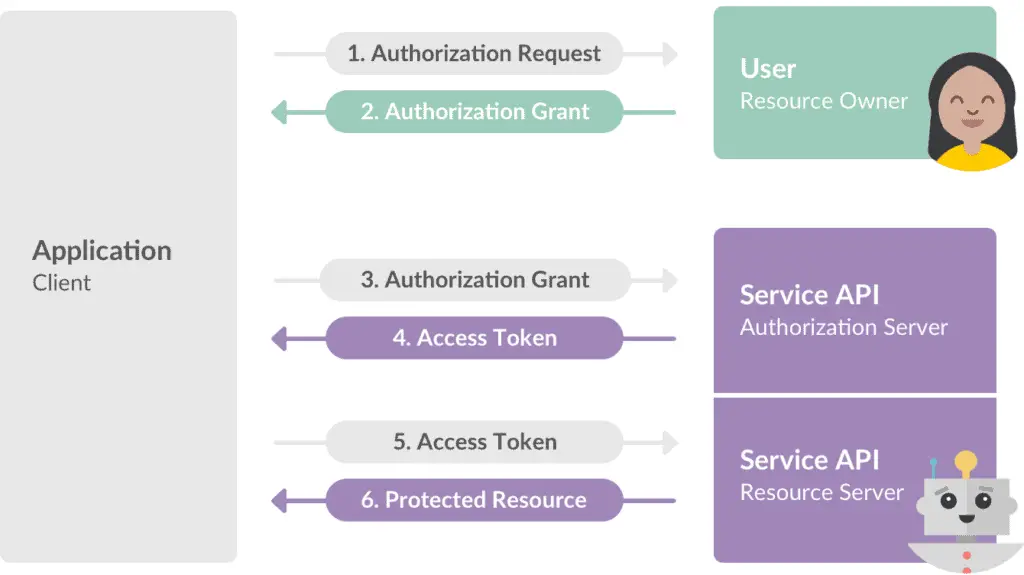
This process gives the 3rd-party website ii things
- It confirms with Google that you are who yous claim to be and
- It gains enough access to your information it needs
to create a new business relationship and, in later visits, allows yous to sign in without a password.
You can hands manage third-party access to your Google account. You tin can remove the website's access entirely or select specific permissions and shared information to revoke.
Annotation: Removing a third party'southward admission to your Google account doesn't delete the business relationship created on their website or service.
Advantages vs. Disadvantages of Signing In With Google

Signing into third-party sites using an hallmark provider makes it much easier for you to protect a wide range of accounts with a more straightforward login procedure.
At the same fourth dimension, privacy is a concern, and non all accounts yous create volition offer all authenticator login options. Because the pros and cons will help make up one's mind which login choice is best for you.
Advantages of Signing in with Your Google Account
Logging in with 3rd-political party accounts offers advantages in terms of overall security, often being the safest solution to managing accounts apart from countersign managers.
These are the primary advantages of signing in with Google or other identity providers:
- Convenience and Simplicity: Using an identity provider such as Google allows account management to be washed for you lot. You tin become into Google and look at all the accounts and websites you take used Google to sign in and make changes quickly. You don't accept to create or think passwords.
- Increased Security: Google, Facebook, Twitter, and Apple tree are large companies that have made security a summit priority. When you create a unique countersign on a smaller site, their resources and ability to protect your information is typically much riskier. If a hacker gets your information from the small-scale site, they have a improve chance of acquiring your stored information.
- Personalized Experiences: Based on your Google and other service usages, tertiary parties tin cater their site to your preferences more than efficiently for a ameliorate online experience.
Ease of use and security are the top priorities when managing your accounts through an identity provider. They let yous to keep information in a centralized location and rely on secure servers to store your login data.
Disadvantages of Signing in with Your Google Account
Any system comes with its disadvantages, which should also be considered when creating an account using an authentication service for signing in.
These are the primary disadvantages to consider when setting up your accounts with Google and other identity services:
- Privacy Concerns: The listing of websites you accept logged into using your Google account is stored with Google. The company volition also go on track of every time you've used a Sign In with Google button. Using an authenticator service gives Google, Facebook, Apple, etc. data well-nigh your habits, interests, and cyberspace traffic. This accumulated profile information results in reduced privacy and increased value for targeted ad
- Potential Inconsistency for Identity Providers: You lot may still need a password managing director if not all the apps or sites yous utilize volition allow y'all to sign in with Google (or similar identity services). Managing account access to certain identity providers requires careful tracking.
- Challenges to Unlink from Authentication Providers: Google and Twitter make it easy to unlink your information from specific accounts. Yous may find that unlinking is challenging if you are using multiple authenticators. Keep track of which services you utilize to sign in to apps and accounts for the best management.
- Easy to Create As well Many Accounts: You lot may be tempted to activate more online accounts with the ease of using an identity provider. With each new account, you pass along personally identifiable data (PII), sending basic data to many companies. This increases the size of your threat surface.
- Incomplete Security: When using the accounts on the third-party site, y'all should however use two-factor authentication for full account protection. An identity provider only replaces the use of a username and unique password combination. It's not a replacement for multiple layers guarding your business relationship on the third-party site.
Consider:
As with most things, there's a trade-off. Here we demand to rest convenience and online privacy.
Your Browser Performs Sign In With Google Sites
As early as versions from 2010, the Google Chrome browser could synchronize bookmarks, settings, and other browser data details to your Google business relationship. Afterwards versions have added users' ability to automatically sign in with Google straight from within the browser's signed in session.
This is a useful feature for many merely has expanded by a unproblematic convenience and into controversy.
ZDNet showtime reported that "Google secretly logs users into Chrome whenever they log into a Google site" such as Gmail, YouTube, etc. Google engineers insisted that this feature was intended to protect Google accounts on shared or public computers. Privacy advocates bespeak out this addition adds a new level of accurateness to a large corporeality of personal data collection occurring at the company.
Chrome sends details about its users and their activities to Google through both optional and not-optional user tracking mechanisms.
Wikipedia
When your Chrome browser is signed in with your Google account, you're sending more of your net activities to Google, who collects and uses this data in unclear means and out of our command.
By the way:
The Microsoft Edge browser besides automatically signs in using the current Windows user account. We'll exist on the lookout for what browser data Microsoft is collecting. Nosotros've previously reported that Windows security is apropos.
Set up: To combat this class of traffic, consider switching to an open up-source browser like Brave with built-in tracking protection, which they call privacy shields. The browsing experience is identical to Chrome and Edge, just with better privacy. For a quick overview, check out our commodity here.
Signing In With Facebook, Apple, Microsoft, Twitter, and Beyond
There are around eighty hallmark/identity providers from big-name presences on the internet. Chances are you have accounts at several of these services.
If you're ane of those who don't use a password managing director, using an identity provider service helps increment your overall security.
Heads upwardly:
As you sign in with different authenticator services, they each add a cookie or bit of information to your browser. Historically, this was for session handling simply also helped track your traffic around the internet.
In 2020, The Verge reported that Google Chrome joined the other browser manufacturers to phase out cookie tracking.
The visitor is looking into other technical methods of taking user behavior. Google will leverage users existence signed into Chrome as part of that strategy.
Final Thoughts
Google and similar identity services accept proven to exist a safe option for signing into 3rd-party accounts. Authentication providers increase the security of those users who are non adept at using a password director. The trade-off for this service is the loss of some of your online privacy.
Call back that using authentication services like Google, Facebook, Twitter, Apple, and the like, is a replacement for the old username and password concept. You should still enable two-factor hallmark in each third-party site.
With any new business relationship y'all make, look at the security settings you have to protect them. Your diligence will be the most effective way to protect yourself from cybersecurity threats.
danielspladid1976.blogspot.com
Source: https://dataoverhaulers.com/sign-in-google-safe/
0 Response to "what does it mean to sign in with google"
Postar um comentário